It’s July.
You said you’d host more events this year. More dinners. More get-togethers. More intentional time with the people who matter. Building community — real community, not just a big once-a-year party — was the plan.
So. How’s that going?
I ask because I’ve made that same promise for years. And for years I failed at it in exactly the same way: I’d host something big once or twice, feel good about it, and call it a win. Then I’d wake up in July and realize I hadn’t seen half the people I cared about since January.
The midpoint of the year is a useful gut-check. Not to shame yourself. Just to get honest about what you’ve done versus what you intended.
Quick verdict: Building community doesn’t happen at one big annual party — it happens through small, recurring gatherings. If summer has scattered your social life, the best time to restart is right now. Host your next community event on Mixily →
Why Summer Is the Hardest Time to Build Community
Summer feels like the social season. But it’s actually the worst time to build community if you don’t have a plan.
Everyone’s traveling. Schedules collapse into chaos. The Tuesday dinner that worked perfectly in February becomes impossible when half your friends are at the beach and the other half have kids in camp. So we stop hosting. We tell ourselves we’ll restart in September when things settle down.
Then September becomes October. And the year slips away.
I’ve done this. A few years back, I hosted 14 events between January and May — and then basically nothing through summer. By October I felt strangely disconnected from people I genuinely liked. I’d been present at plenty of things. I just hadn’t been the one doing the inviting.
That’s the trap. Showing up to other people’s events feels social. But it’s different from hosting. When you’re the host, you choose who’s in the room. You set the conditions for connection. When you’re just a guest, you go with the flow — which is fine, but it won’t build the community you’re picturing.
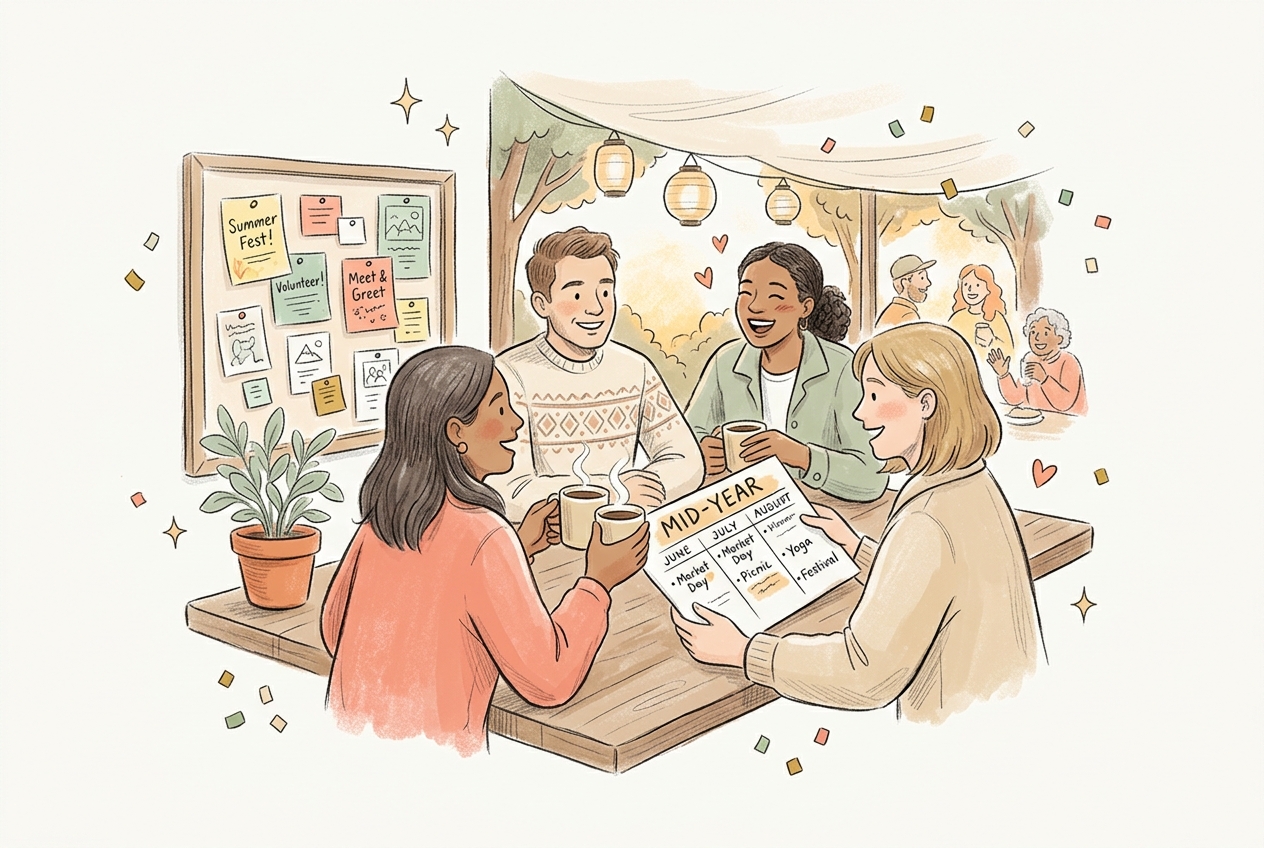
The Mid-Year Audit: 3 Questions for Building Community
Don’t overthink this. Three questions, five minutes.
1. How many events have you hosted this year?
Not attended — hosted. Even coffee with three people counts. If the answer is zero or one, that’s useful information, not a reason to feel bad. If it’s five or more, what was working?
2. Who haven’t you seen enough of?
Write down three names. Don’t analyze. Just the names. Those people are who your next event should be built around.
3. What’s one recurring thing you could start before September?
Not a big annual gathering. Not a “someday” idea. One small, repeatable format — a monthly dinner, a weekly walk, a quarterly neighborhood hangout — that you could actually do for the first time before summer ends.
Here’s where most people get stuck:
Keep it small enough that canceling wouldn’t feel catastrophic. Monthly dinners for 6 people are far easier to sustain than quarterly parties for 40.
Wait until September for a fresh start. Fall always feels like the perfect time to begin. And then it doesn’t happen. July is fine. Start now.
When you’re ready to plan something, our complete guide to online RSVPs covers how to send invites and track who’s coming — free, and takes about five minutes. Create your event on Mixily →
Why Small Recurring Events Beat One Big Party
Here’s what I learned the hard way: one big annual party feels great. It does almost nothing for actual community building.
Think about the last party you went to with 40 or 50 people. How many meaningful conversations did you have? How many people did you actually reconnect with — not just exchange pleasantries before drifting to the next person?
Big events are celebratory. Recurring small events are connective. They’re different things.
I started monthly dinners with the same 8 people about two years ago. Nothing fancy — we rotate houses, someone makes pasta, someone brings wine. We’ve been going 23 months now. I know things about those eight people — their career anxieties, their marriages, their fears about getting older — that I never would have learned at a cocktail party.
That’s the compounding effect. Every gathering builds on the last one. You skip the small talk because you did it last month. You get to the real stuff faster.
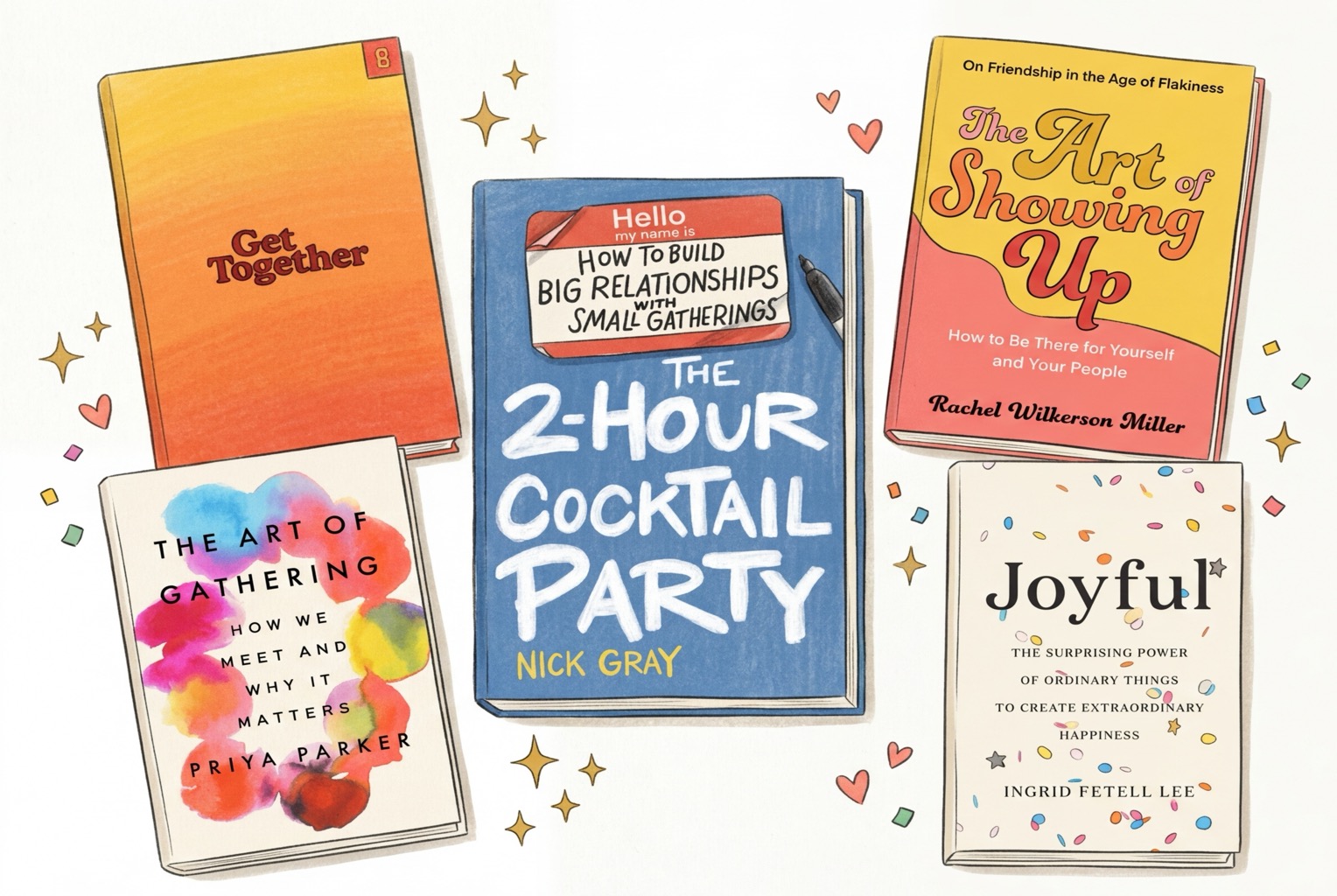
The building community through events framework goes deep on this if you want the full picture. But the short version: frequency beats scale, every time.
The Monthly Gathering Formula
If you want to start something sustainable before September, here’s what actually works:
- Same frequency — monthly is the sweet spot. Often enough to build real momentum, not so often it becomes a burden.
- Same basic format — no elaborate themes. Consistency is the point.
- 6–10 people — big enough for energy, small enough for real conversation.
- 2 hours max — people can commit to 2 hours. They can’t commit to “not sure when it ends.”
For everything on why the most powerful community building happens through things you repeat — not things you perfect — read more on recurring event planning.
Five Summer Hosting Ideas You’ll Actually Do
The best summer events are low-effort. The goal is doing them — not making them impressive.
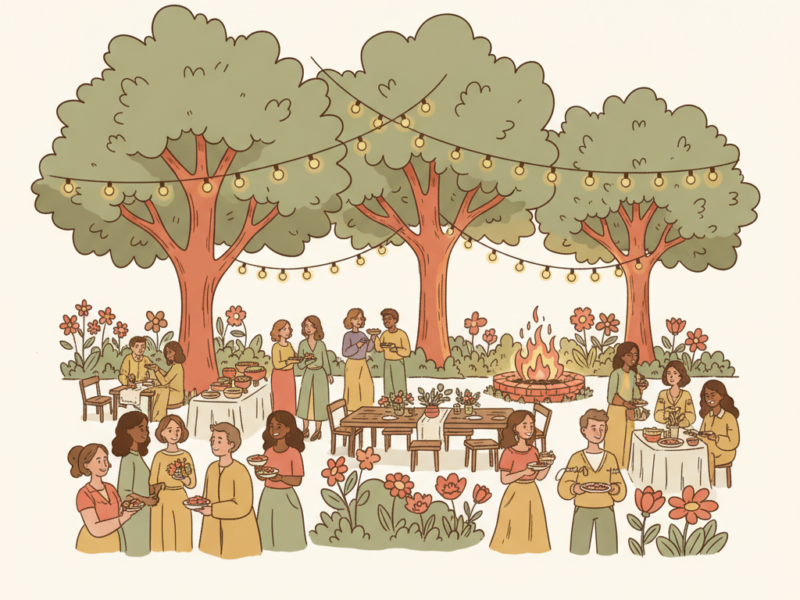
- Backyard happy hour. You provide the drinks. Guests bring a snack. 5–8 people. Two hours on a weeknight. That’s the whole event.
- Park hang. Pick a park, tell people to show up at 6 pm with a blanket. No agenda. Some will bring wine, some will bring kids. This is a genuinely great event format.
- “No agenda” dinner. Invite 8 people. Make one thing. Order pizza as backup. Easy dinners get repeated. Elaborate ones don’t.
- Morning walk group. A Saturday walk with 4–5 people is one of the best social formats I’ve found. People talk differently when they’re walking side by side. No alcohol required.
- Recurring anything. Pick one of the above and commit to doing it monthly. Before people leave, say: “Same time next month?” Then actually send the invite.
Send a specific invite — date, time, address. “We should hang out soon” never turns into an actual event. “Saturday the 19th, 6 pm, my place” does.
Stress about the food, the space, or whether it’s good enough. People remember how they felt in the room, not what they ate.
For a deeper look at the 2-hour party formula that makes small gatherings actually work, that’s worth reading before your next event. And if you need a full bank of community event ideas to pull from, there’s a solid list there. For the practical side of hosting people at home without overcomplicating it, that’s covered in detail.
Your Challenge: Host One Small Thing Before August 1
Here’s your challenge. Before August 1 — not someday, not September, before August 1 — host one small thing.
Three people and a pizza counts. A morning walk counts. Drinks on your porch counts. The size doesn’t matter. The doing matters.
Building community doesn’t happen at the annual party. It happens in the small recurring moments — the ones you create, not the ones you wait to be invited to. If you want a practical walkthrough on how to plan a gathering from scratch, start there.
Pick a date. Send the message. See who shows up.
Heck yes — you’ve got this. When you’re ready to send invites and track RSVPs in five minutes flat, host your community event on Mixily →
Related reading: Building Community Through Regular Events | The Power of Recurring Events | Complete Guide to Online RSVPs | game night ideas