Table of Contents
Why Introverts Actually Make Great Hosts: Introvert Hosting Party
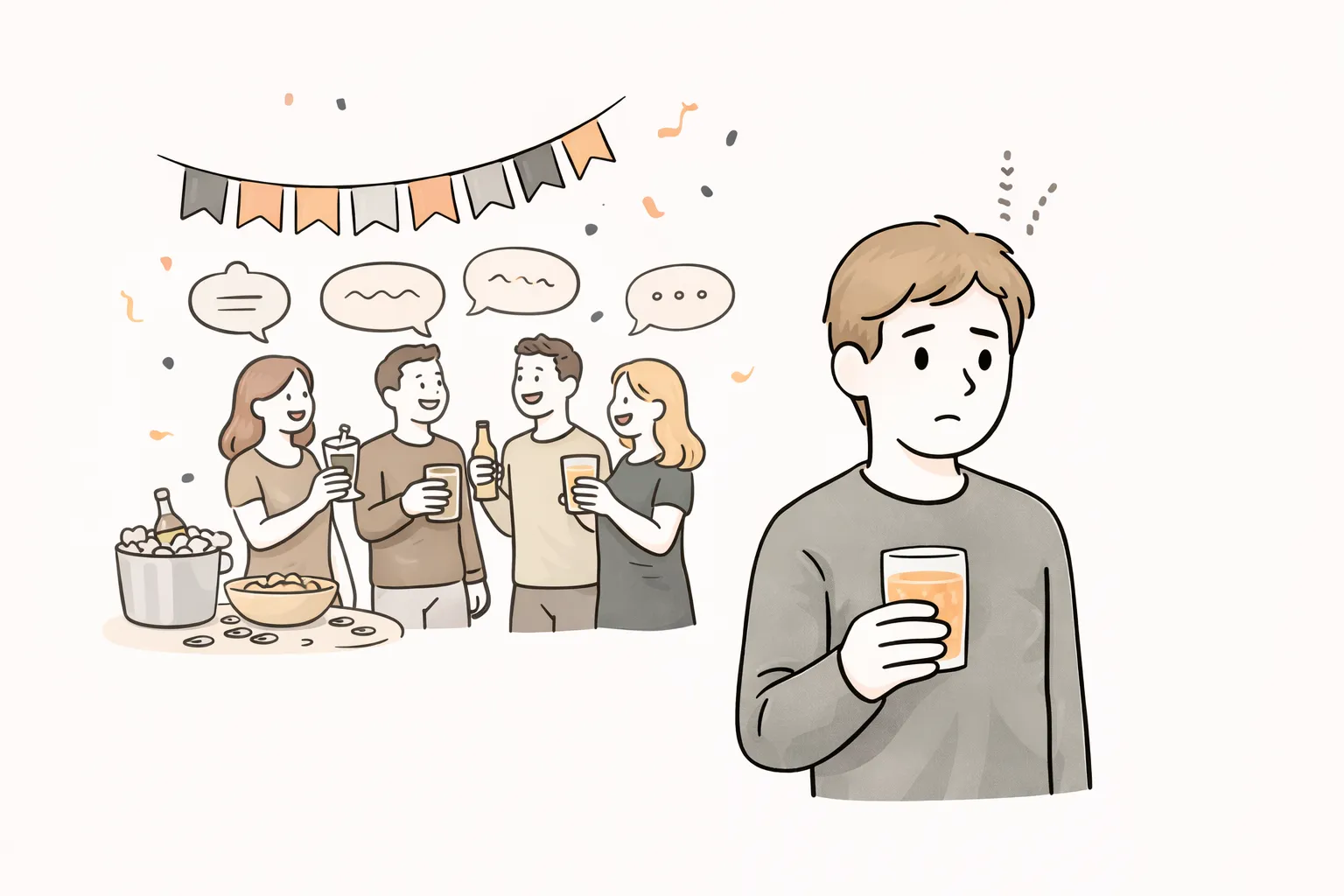
I have a confession — and introvert hosting party is at the heart of it. I used to dread parties. Not because I hated people. I hated the uncertainty. Who do I talk to? When can I leave? Why is everyone standing in a circle and I’m hovering near the cheese plate?
Then I started hosting my own events. And something clicked.
When you’re the host, you have a role. You’re not floating awkwardly wondering what to do with your hands. You’re greeting people at the door. You’re introducing strangers. You’re refilling the ice bucket. You have a job, and that job gives you structure.
Structure is an introvert’s best friend.
Here’s the thing most people get wrong about introverts and parties. They think we hate socializing. We don’t. We hate unstructured socializing with no clear beginning, middle, or end. We hate walking into a room full of strangers with no plan. If that sounds familiar, you might relate to this guide on party anxiety and how to work through it.
But hosting? Hosting is ALL plan. And that’s why you, the quiet one, might be the best host in your friend group.
Use a Formula So You Don’t Have to Guess
The number one reason introverts avoid hosting is decision fatigue. How many people? What food? What do we do? When does it end?
Here’s how to eliminate all of that.
Pick a format and repeat it. I use a simple cocktail party formula. 15 people. 2 hours. Name tags. Icebreakers. Done.
You don’t need to reinvent the wheel every time. When you have a formula, hosting becomes like following a recipe. You know the ingredients, you know the steps, and you know exactly when it’s over.
Pick one format and master it
Try to create a totally unique event every time. That’s exhausting.
Name Tags and Icebreakers Help You Too
I know what you’re thinking. “Name tags? At a house party? That’s weird.”
It’s not weird. It’s a gift to everyone in the room, including you.
When everyone wears a name tag, you never have to suffer through that awful moment where you forgot someone’s name but it’s been 45 minutes and now it’s too late to ask. Name tags eliminate that anxiety completely.
Icebreakers work the same way. They give the room a shared activity. Instead of you needing to carry conversations, the icebreaker does the heavy lifting.
Try this one: go around and have everyone share their name, what they do, and one thing they’re excited about this week. It takes 30 seconds per person. It gives everyone something to follow up on. And it means you don’t have to be the social engine for the whole party.
As an introvert, icebreakers are your secret weapon. They create conversation momentum so you can step back and breathe.
Keep It to 2 Hours (This Is Non-Negotiable)
Here’s the single best piece of advice I can give any introvert who wants to host: put an end time on your invitation. (For help with what to write, check out these invitation wording ideas.)
“Cocktail party. 7pm to 9pm.”
That’s it. Two hours. Not “7pm until whenever.” Not an open-ended hangout that might last until midnight. Two hours with a hard stop.
Why does this matter so much? Because when you know exactly when it ends, you can pace yourself. You can push through the energy dip at the 90-minute mark because you know the finish line is close. You can be fully present because you’re not secretly wondering how to get people to leave.
Two hours is plenty of time for great conversations. It’s short enough that people leave wanting more. And it protects your energy so you don’t spend the next three days recovering on the couch. There’s actually solid reasoning behind why shorter party durations lead to better events. It’s not just an introvert thing. It’s a hosting thing.
Put start AND end times on every invitation
Host an open-ended gathering. That’s a recipe for introvert burnout.
Start Small: 10 to 15 People Is Perfect
You don’t need to host 40 people. You don’t even need 20. Start with 10 to 15.
Here’s why that number works. It’s big enough that you’re not stuck in one conversation all night. If one chat fizzles, you can naturally move to another person. But it’s small enough that the room doesn’t feel chaotic or overwhelming.
With 10 to 15 people, you can realistically talk to almost everyone. You can keep track of who’s arrived and who hasn’t. You can notice if someone’s standing alone and introduce them to someone else.
That last part is huge. When you introduce two people to each other, you give them a conversation and you give yourself a graceful exit. “Hey, Sarah, this is Marcus. He’s also really into hiking.” Then you can step away, take a breath, and recharge for a minute.
Give Yourself Permission to Take Breaks
This is something nobody talks about. As the host, you’re allowed to disappear for a few minutes. Need to “check on something in the kitchen”? Go ahead. Want to “grab more ice from the garage”? Take your time.
Nobody notices when the host steps away briefly. And those 2-to-3 minute breaks can completely reset your energy.
I keep a little checklist of host tasks that double as break opportunities. Refill the snack bowls. Check the bathroom for supplies. Take out trash. These are real tasks that also happen to get you a few minutes of quiet.
The key is not to feel guilty about it. You’re not being antisocial. You’re managing your energy so you can be a great host for the full two hours. Think of it like interval training. You go hard for 15 minutes of socializing, then you take a quick recovery lap to the kitchen. Nobody questions it. Nobody even notices. And you come back refreshed and ready for the next round.
Build in small breaks disguised as host duties
Feel like you need to be “on” every single second.
The Recharge After
Let’s be honest. Even with all these strategies, hosting takes energy. When the last person leaves and you close the door, you might feel wiped out. That’s completely normal.
Build in recharge time after your event. Don’t schedule brunch with friends the next morning. Don’t plan a busy day of errands. Give yourself the next day (or at least the next few hours) to decompress. Block it off on your calendar like it’s an actual appointment. Because it is. Your recharge time is just as important as the party itself.
I usually spend the evening after a party in total silence. No phone calls. No social media. Just quiet. And honestly? It feels amazing. Because I just did something brave. I brought people together. I created connections. I gave my friends a great night.
And I did it on my own terms.
Planning Your First Event Step by Step
Maybe you’ve read all of this and you’re thinking, “Okay, I’m in. But where do I actually start?”
Here’s your action plan. This week, pick a date two to three weeks from now. Text five friends and say, “I’m having a small get-together at my place. Are you free on [date]?” That’s it. That’s the first step.
Once three people say yes, you have your event. Now pick up snacks, buy name tags, and choose one icebreaker. Print out or bookmark a simple hosting guide to reference the day of. For a more detailed walkthrough, our how to plan a party guide covers every step from picking a date to the final cleanup. Having a checklist you can glance at takes all the guesswork out of it.
The day of, set out the food an hour before. Write your icebreaker question on a piece of paper so you don’t forget it. Put on some background music. And when the doorbell rings, take one deep breath before you open it.
You’re going to do great. I mean that.
The hardest part isn’t the party. It’s sending that first text. Everything after that is just following through. And introverts are excellent at following through.
Your Introvert Hosting Cheat Sheet
Here’s everything in one place.
Pick a format and repeat it every time. Use name tags and a simple icebreaker. Cap it at 2 hours with a clear end time. Invite 10 to 15 people to start. Take short breaks when you need them. Protect your recharge time afterward.
That’s it. No big production. No pretending to be an extrovert. Just a simple, structured gathering that plays to your strengths.
The world needs more introverts who host. We bring thoughtfulness, preparation, and genuine care to our events. We think about the person standing alone in the corner because we’ve been that person.
You don’t have to be the loudest person in the room to bring people together. You just need a plan.
Ready to host your first party? Mixily makes it easy to create an event page, send invitations, and track RSVPs — all for free. Start your event today.
Related reading: How to Host a Party | The Power of Name Tags at Parties | Birthday Party Planning Guide | game night ideas