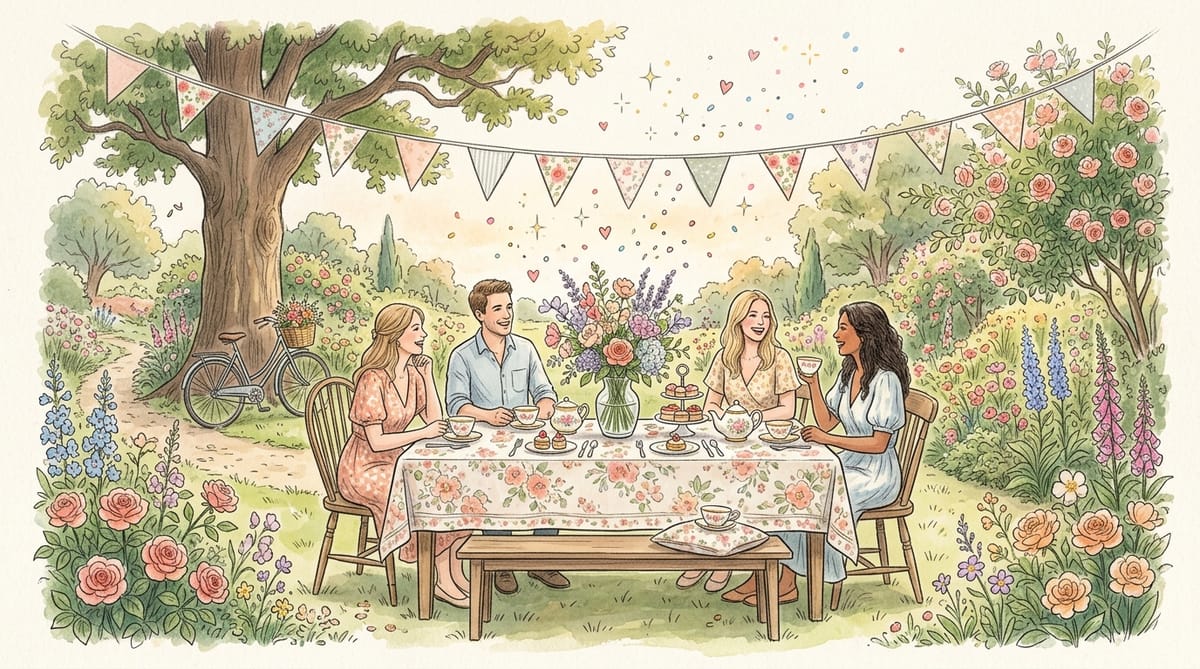
A garden party sounds intimidating. It conjures images of perfect hedgerows, white tablecloths, and waiters in bow ties. But a great garden party doesn’t need to be fancy. It needs to be intentional.
I’ve thrown garden parties in a backyard with a dying lawn and a folding table from the garage. They worked. The flowers helped. So did the cold rosé and the fact that we started with a proper icebreaker. This guide covers everything you need to host a garden party people will talk about after.
Key Takeaways
- Garden parties work for groups of 10–30 — intimate enough for real conversation, large enough to feel like an event
- Flowers, tablecloths, and string lights do most of the aesthetic work — you don’t need a perfect garden
- Late afternoon (4–7pm) is the best timing — golden light, cooler temperatures, natural energy
- Food should be elegant but easy to eat standing — finger foods, small plates, and good drinks
What Makes a Garden Party Work
Garden parties have a distinct vibe: relaxed elegance. Not casual like a BBQ, not formal like a sit-down dinner. Somewhere in between — nice enough to feel special, loose enough that people actually relax.
Three things make the difference:
- Timing. Late afternoon is ideal — 4pm to 7pm. The light is soft. The heat is dropping. People aren’t too hungry, and you’re not committing to a full dinner service.
- Atmosphere. A few simple upgrades — flowers, a tablecloth, string lights or candles — transform any outdoor space into something that feels curated. You don’t need a manicured garden.
- Food and drink that travels. Garden party food should be easy to eat while standing and talking. Finger sandwiches, charcuterie, fresh fruit, petit fours. Nothing that requires a fork and knife while you’re balancing a drink.
For a deeper breakdown of outdoor event logistics, the outdoor party planning guide covers weather planning, power setups, and shade solutions in detail.
Garden Party Setup: Step by Step
Here’s how to set up a garden party from scratch — even if your outdoor space is a small patio or a borrowed backyard.
Step 1: Claim Your Space
Walk your outdoor area and identify where people will congregate. You want at least two or three zones: a food and drink table, a seating area with chairs or blankets, and open space for people to stand and mingle. Avoid clustering everything in one spot — spread it out so people move around naturally.
Step 2: Handle the Aesthetic
You don’t need to hire a florist. Grab a few bunches of flowers from the farmers market or a grocery store. Wildflowers work especially well — they’re casual and lush. A white or linen tablecloth on the food table immediately upgrades the whole setup. Add string lights or paper lanterns if the party might extend into dusk.
Step 3: Plan the Food
Garden party food is about variety and elegance over quantity. Think:
- Finger sandwiches (cucumber, smoked salmon, egg salad)
- Charcuterie and cheese board
- Fresh fruit skewers or a fruit platter
- Mini quiches or savory tarts
- Petit fours or macarons for something sweet
Keep hot food to a minimum — things that need to be heated and served at temperature are stressful when you’re also trying to host. Cold and room-temperature options are much easier to manage.
Step 4: Set Up the Drinks
Garden parties call for light drinks. Sparkling wine, rosé, a pitcher of Pimm’s Cup or sangria, and a non-alcoholic option like sparkling lemonade or cucumber water. Set up a self-serve drink station with a cooler of ice so people can help themselves — it takes pressure off you as the host.
Step 5: Manage the Guest Experience
The first 15 minutes make or break a garden party. Have a plan for welcoming guests as they arrive. A signature drink ready to hand them. A name tag station if people don’t know each other well. An icebreaker prompt on the table.
I always use a structured conversation starter for garden parties — something like “Tell us one thing you’re looking forward to this summer.” Simple. Gets people talking. The icebreaker ideas at party.pro have 50+ prompts for exactly this kind of setting.
Greet every guest at the door (or garden gate) personally. Hand them a drink and introduce them to someone else within the first two minutes.
Leave guests to fend for themselves when they arrive. Those first few minutes determine whether they settle in comfortably or spend the whole party feeling awkward.
Garden Party Themes That Work
A theme makes a garden party feel intentional rather than just “we went outside.” Here are themes that work well without being cheesy.
English garden tea party. Bone china (or good-looking plastic), finger sandwiches, scones with clotted cream, and a proper pot of tea. Classic and surprisingly fun for a mixed group.
Provençal rosé hour. French vibes — lavender, rosé wine, crusty bread, charcuterie, olives. Set the table with a linen cloth and a bunch of lavender in a jar. Simple and gorgeous.
Midsummer evening party. String lights, wildflowers, candles at dusk. Inspired by Midsummer — a Nordic tradition celebrating the longest days of the year. Works beautifully in June.
Floral brunch. A spring or early summer brunch centered on edible flowers, floral arrangements at every table, and light, colorful food. Visually stunning and very photogenic.
Garden cocktail hour. No theme needed — just good cocktails, light bites, and a two-hour window. The garden does the rest. This format is covered in detail in the backyard party ideas guide.
Garden Party Planning Timeline
Here’s a practical timeline for a garden party of 15–25 people.
2–3 weeks out: Set the date, send invites, collect RSVPs. Use Mixily’s RSVP tool to track responses without a spreadsheet. For a garden party, you need a solid headcount to buy the right amount of food.
1 week out: Finalize the menu. Shop for non-perishables. Order flowers if you’re getting them delivered. Confirm any rentals (chairs, tablecloths, glassware).
2 days out: Send a reminder to guests. The automated reminder messages from Mixily are perfect for this — a quick “Looking forward to seeing you Saturday!” reduces no-shows significantly.
Day before: Buy fresh flowers. Prep any food that can be made ahead. Set up the outdoor space — furniture arrangement, tablecloths, lights. Test your speaker and playlist.
Morning of: Buy remaining fresh food. Fill coolers with ice. Arrange the flowers. Set up the drinks station. Give yourself one hour of buffer before guests arrive — you’ll need it.
The how to plan a party guide has a full party checklist that works for garden parties — including setup, shopping, and cleanup lists.
What to Do If You Don’t Have a Garden
No backyard? No problem. You have options.
- A park permit. Many parks allow group gatherings with a permit. Reserve a picnic area or pavilion and set it up as your “garden.”
- A friend’s backyard. Co-host with someone who has outdoor space. You handle the planning and food; they provide the venue.
- A rooftop. Many apartment buildings have common rooftop areas. They work beautifully for garden party aesthetics, especially at dusk.
- A community garden. Some community gardens allow private event bookings. Worth checking in your area.
Host a Garden Party Worth Remembering
A garden party works because of the combination: outdoor air, good food, natural beauty, and the relaxed but intentional atmosphere. None of those require a perfect garden or a big budget.
Pick a date, send invites early, plan a simple but lovely menu, and add a few aesthetic touches that signal “this was thought through.” That’s the whole formula.
Ready to send your garden party invitations? Create a free event page on Mixily — collect RSVPs, share location details, and send reminders all in one place.
Related reading: Outdoor Party Planning Tips | Backyard Party Ideas | Summer Party Ideas | Housewarming Party Ideas