The dinner party is back. After years of everyone defaulting to restaurants, more people are rediscovering what it feels like to sit around someone’s actual table, eat food someone actually cooked, and have a real conversation that lasts more than ninety minutes.
I’m a big believer in this. Dinner party ideas don’t have to be complicated — in fact, the best dinner parties are usually the simplest ones. The goal isn’t to impress. The goal is to connect.
This guide covers everything: the right size, the menu, the seating, the drinks, and the timing. By the end, you’ll know exactly what to do.
Why Dinner Parties Are Worth Hosting
Going to a restaurant with friends is great. But it’s also passive. You sit, someone brings food, you leave. The connection is real but the experience is forgettable.
A dinner party is different. When you invite people into your home and cook for them, you’re saying something. You’re saying: I care about you enough to put in effort. That lands differently than a reservation.
Research on social connection consistently finds that in-home gatherings build stronger bonds than going out. There’s something about a kitchen, a couch, and someone else’s art on the walls that makes people feel more comfortable being themselves.
Plus, a dinner party you host gives you control. The guest mix, the music, the vibe, the pacing — all yours. You can make it exactly what you want it to be.
The Right Size for a Dinner Party
Six to ten guests is the sweet spot.
With six people, you have one flowing conversation at the table all night. With ten, you have the energy of a real gathering without the chaos of managing too many people at once.
Below six starts to feel like a double date with extra steps. Above twelve, the dinner party becomes an event, and you stop being a host and start being a restaurant manager.
Eight is my personal favorite number. It fits most dining room tables, creates natural sub-conversations, and keeps the energy high without overwhelming the host.
If you’re new to hosting, start with six. Really. Get comfortable with the rhythm before you scale up. For more on building your hosting skills, the guide to hosting people at home is a great place to start.
Planning Your Dinner Party: The Timeline
Good dinner party ideas live or die on preparation. Here’s the timeline that works.
2–3 Weeks Out
Pick your date and send invitations. Get your RSVPs in. If you’re hosting on a Saturday, reach out on a Tuesday or Wednesday two weeks before — that’s when people’s calendars are still open. Check out a party agenda template to map out your evening flow before you get too deep into planning.
1 Week Out
Plan your menu. Shop for non-perishables. Confirm any dietary restrictions — this matters more than most hosts realize. One guest with a serious allergy can derail a whole dinner if you find out at the last minute. Use a tool to collect dietary needs from your guests ahead of time so nothing catches you off guard.
Day Before
Shop for fresh ingredients. Prep anything that can be done in advance: chop vegetables, make a sauce, set the table. Set the table the night before — it saves you a surprising amount of stress on the day of.
Day Of
Clean the space, not just the kitchen. Make the welcome drink first, before you start cooking — that way it’s ready the moment the first guest arrives. Have music playing before anyone walks in. First impressions matter.
The Best Dinner Party Ideas Start with a Simple Menu
Here is the biggest mistake hosts make: trying to cook five complicated dishes for the first time simultaneously while also trying to be a good host. It doesn’t work. Something burns. You’re stressed. Your guests feel it.
Make one dish you’ve cooked before and genuinely love. Pair it with easy, low-effort sides — a good salad, some bread, roasted vegetables that basically take care of themselves in the oven.
Attempt a new complicated recipe the night of the dinner party. Save the culinary experimentation for a Tuesday when nobody’s watching.
One impressive main dish + two easy sides + a simple dessert (store-bought is fine, I promise) beats five complicated dishes every single time. Your guests came to see you, not to evaluate your cooking school credentials.
A menu structure that works beautifully:
- Aperitivo snack: Olives, nuts, a cheese — something to nibble while guests arrive
- Starter (optional): Soup, salad, or a simple appetizer
- Main: Your one great dish. Braised short ribs, roast chicken, a really good pasta.
- Sides: Two, maximum three. Roasted vegetables, a grain, bread.
- Dessert: Something you bought from a good bakery, or a simple tart. Vanilla ice cream with a good sauce counts.
Setting the Table (and Why It Matters)
You don’t need matching china or a florist. But a well-set table signals to guests that this matters — that you thought about them.
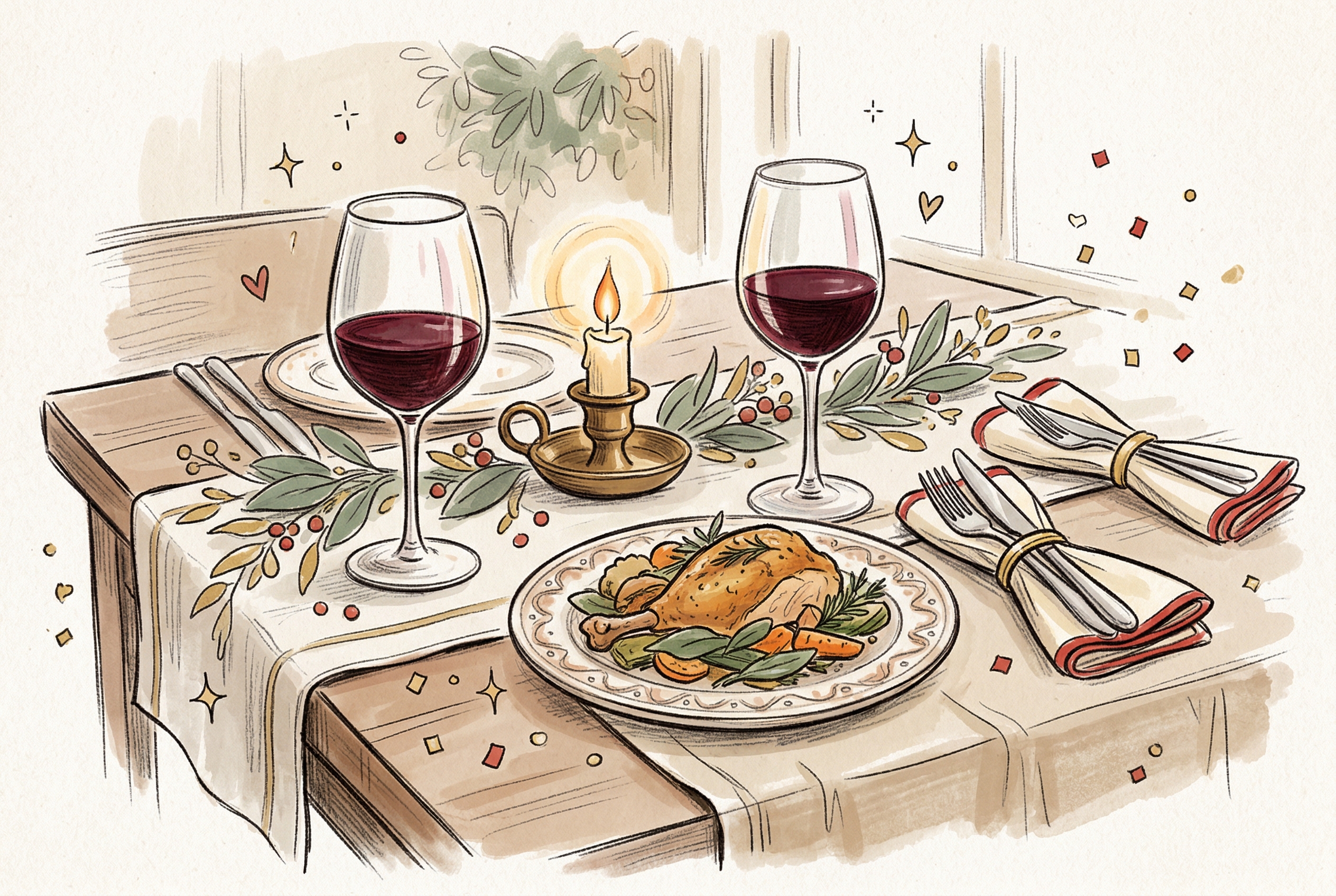
The basics: a cloth napkin (or a nice paper napkin) folded on the plate. A candle in the center of the table — even one candle changes the whole atmosphere. A small something green if you have it: herbs, a plant, a few stems of eucalyptus.
Name cards are underrated. When guests sit down and see their name at a specific seat, they feel expected. They feel like you thought about them specifically. You did — because you chose their seat intentionally. For simple printed or handwritten name tags and place cards, there are great options that take five minutes to set up.
Dim the lights. This is the single highest-return action in hosting. Bright overhead lighting makes everything feel like a cafeteria. Warm, dim light makes everything feel intimate. Use a lamp or candles if your overhead lights don’t dim.
Drinks: The Full Arc of the Evening
Think about drinks in three phases.
Welcome drink: Have one drink ready when guests arrive. A spritz, a simple punch, a glass of wine. The moment someone walks in, they should be handed something. It removes the awkwardness of arrival and gives people something to hold while they meet each other.
Need ideas? Browse these cocktail recipes for batched drinks that work perfectly for a group of eight.
Wine with dinner: One red, one white. That covers most preferences. You don’t need to be a sommelier — just pick wines you like in the $15–25 range. Two bottles for eight people as a starting point, with more on hand.
Non-alcoholic option: Always have one. Sparkling water with citrus, a mocktail version of the welcome drink, or a good lemonade. Not everyone drinks, and nobody should feel singled out for not drinking.
Seating Arrangements: The Secret to Great Conversation
Where you seat people is one of the most powerful tools you have as a host. Use it intentionally.
Seat people next to someone they haven’t met or don’t know well. Deliberately mix the room. Put the architect next to the teacher. Put the person who just moved to town next to your most social friend.
Let couples sit together all night. It kills conversation. When couples cluster, they default to talking to each other. They came to your dinner party — encourage them to actually be at the dinner party. Seat partners across the table or at opposite ends.
Mixing people who don’t know each other creates the best dinner party magic. That’s where the surprising connections happen, the “wait, you know that person too?” moments, the friendships that wouldn’t have started otherwise.
For more on facilitating good mingling, this guide to how to mingle at a party has practical tips you can share with guests who tend to stay in their corner.
Icebreakers and Conversation Starters
Not everyone arrives ready to sparkle. Some guests are coming straight from work. Some don’t know anyone else at the table. A small, structured icebreaker can unlock the whole evening.
My favorite low-key version: as everyone sits down for dinner, go around the table and ask each person to share something they’re looking forward to this month. It’s easy, it’s positive, and it tells the table something real about each person. Five minutes of structure, hours of better conversation.
For a more active version — especially if many guests don’t know each other — try speed friending during the aperitivo hour. It’s like speed dating for making friends: quick one-on-one conversations with every guest before dinner. By the time people sit down, nobody’s a stranger.
You can also pull three or four questions from a list of great icebreaker questions and drop them into conversation naturally — no game needed, just a starting point when the table goes quiet.
The Dinner Party Timeline: How the Evening Actually Flows
Here’s what a great 2.5 to 3 hour dinner party looks like:
- 7:00pm — Aperitivo (30 minutes): Guests arrive. Welcome drink in hand. Nibbles on the table. Casual standing mingling. This is when you finish any last-minute cooking without it being obvious.
- 7:30pm — Sit down for dinner: Call everyone to the table. Do your icebreaker question. Pour wine.
- 7:30–9:00pm — Dinner: Serve the meal in relaxed phases. Don’t rush. Good conversation slows everything down naturally.
- 9:00–9:30pm — Dessert and wind down: Bring out dessert. Offer coffee or tea. The energy naturally settles. Guests start thinking about leaving, which is fine.
- 9:30–10:00pm — Natural ending: The first guests to leave give permission for everyone to go. Thank people warmly as they head out. Don’t apologize for anything — the night was wonderful.
The 2-hour dinner party format — aperitivo in, dinner, dessert, out — is the most host-friendly structure there is. It’s long enough to feel meaningful. Short enough that everyone leaves wanting more.
A Real Example: Marcus’s Monthly Dinner Party in Boston
Marcus, 34, hosts a dinner party in his Boston apartment on the third Saturday of every month. Eight guests each time, usually a mix of old friends and one or two new people he’s met recently.
His menu never varies much: roast chicken thighs with lemon and herbs (he’s made it forty times and could do it in his sleep), a big arugula salad, crusty bread, and a cheese plate he buys from the shop downstairs. Dessert is always a tart from the French bakery around the corner.
He sends invitations two weeks out, collects RSVPs online, and has the table set by 4pm on the day of the party. By the time guests arrive at 7pm, he’s calm. The apartment smells like roasting chicken. There’s a pitcher of Aperol spritz on the counter.
He always seats couples apart and puts one new person next to his most talkative friend. “That person’s going to be taken care of,” he says. “They won’t be left stranded.”
He’s been doing this for two years. He says it’s the single best thing he’s done for his social life — and for keeping his existing friendships strong. Two of his guests have since started hosting their own dinners. That’s how it spreads.
Dinner Party Ideas to Make It Memorable
Beyond the food and the seating, a few small touches make a dinner party feel special:
- A theme (optional): Italian night, farm-to-table, a specific region’s cuisine. Themes give the meal a cohesive feel and give guests something to talk about.
- A handwritten menu card: A simple index card at each seat listing what you’re serving. Guests love knowing what’s coming.
- Music: A playlist that matches the energy of each phase — upbeat for aperitivo, slightly softer during dinner, quiet during dessert.
- Fresh flowers or herbs: A small bunch of herbs from the grocery store costs $3 and smells wonderful on the table.
None of these are required. All of them take 5 to 15 minutes. Any one of them will be noticed and appreciated.
For broader hosting inspiration, check out the complete guide to planning a party — it covers the full arc from concept to cleanup. And if you’re hosting a smaller, drinks-forward gathering, the cocktail party ideas guide is worth a read too.
Ready to get your guests on the calendar? Mixily makes it easy to invite your group, collect RSVPs, and track who’s coming — all for free. Send invitations in minutes and spend the rest of your energy on the food.
Related reading: How to Plan a Party | Cocktail Party Ideas for Every Budget | housewarming party ideas